
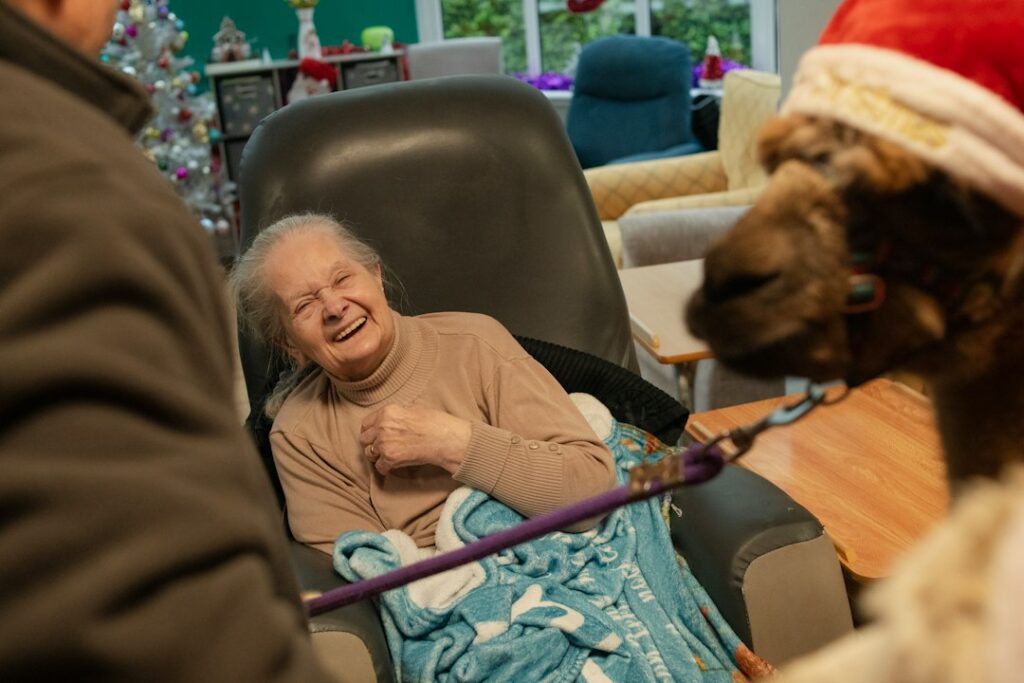
Holiday celebrations in assisted living can remain joyful, familiar, and personal. The most successful gatherings usually combine meaningful traditions with practical adjustments for residents’ health, energy, mobility, dietary needs, and preferences.
For residents and families in Boalsburg, PA, seasonal conditions also matter. Winter weather can affect travel, visitors may need to plan around shorter daylight hours, and indoor activities often become especially valuable. A thoughtful holiday plan helps residents participate without feeling rushed, overwhelmed, or left out.
How can residents celebrate holidays in assisted living?
Residents can celebrate through shared meals, decorating, music, faith-based observances, family visits, crafts, storytelling, and familiar personal traditions. Participation does not need to involve a large party or a full day of activity.
A holiday may be meaningful because of a small detail, such as:
- Listening to favorite seasonal music
- Displaying a treasured ornament or family photograph
- Decorating cookies or making simple crafts
- Watching a familiar movie
- Sharing a family recipe
- Writing cards to relatives
- Attending a quiet religious or spiritual service
- Talking about past celebrations and family memories
Activities should allow residents to choose how much they want to do. Some people enjoy being in the center of a gathering, while others prefer a short visit, a quiet meal, or time with one or two people.
What should families ask before planning a holiday visit?
Families should ask about the residence’s visitor procedures, activity calendar, meal schedules, infection-prevention practices, and guidelines for decorations or food brought from home. These details can change during the holiday season or during periods of illness.
It is also helpful to ask:
- What time of day is the resident usually most alert?
- Are there quiet areas available for visits?
- Can a resident leave the building for a family meal?
- Are there transportation or weather-related limitations?
- What foods, drinks, or gifts may be restricted?
- Does the resident need help with mobility, hearing, vision, or communication?
- Are overnight visits or extended outings realistic?
Planning around the resident’s normal routine often works better than expecting the person to adjust to a long, demanding schedule. A midmorning visit may be more enjoyable than an evening gathering if the resident becomes tired later in the day.
How can holiday traditions be adapted for older adults?
Traditions can be simplified without losing their meaning. A resident who once prepared a large meal may still enjoy choosing the dessert, folding napkins, telling family members how a recipe was made, or decorating a small tabletop tree.
Adaptations may include:
- Using lightweight or unbreakable decorations
- Preparing smaller portions of traditional foods
- Replacing complicated crafts with larger, easier-to-handle materials
- Playing music at a comfortable volume
- Offering seated activities rather than standing tasks
- Breaking a long celebration into several shorter visits
- Providing written menus or activity instructions in large print
- Using photographs, familiar objects, or scents to prompt memories
The goal is not to recreate every detail of a past holiday. It is to preserve the parts that carry emotional meaning while reducing unnecessary effort and risk.
How can holidays be made comfortable for residents with memory loss?
Residents with memory loss often respond well to familiar sights, sounds, foods, and routines. However, crowded rooms, loud music, unfamiliar guests, or too many decorations can cause confusion or distress.
A calmer approach may include one activity at a time, introductions repeated as needed, and simple explanations about what is happening. Family members can avoid testing memory with questions such as “Do you remember who I am?” Instead, they can offer reassurance and conversation based on the present moment.
Helpful approaches include:
- Bringing one or two familiar photographs
- Singing well-known songs together
- Looking through an old recipe card
- Offering a simple sensory activity, such as arranging fabric ribbons
- Keeping visits brief if the resident becomes tired
- Maintaining regular mealtimes and rest periods
- Watching for signs of overstimulation

If a resident becomes upset, leaving the activity early is not a failure. A quieter room, a snack, a familiar object, or a short walk may help restore comfort.
What holiday foods are safest to share?
Holiday foods can be included when they fit the resident’s dietary plan and swallowing abilities. Families should check before bringing homemade dishes, especially if the resident has diabetes, food allergies, kidney disease, heart-related dietary restrictions, or a modified-texture diet.
Foods that may require extra care include hard candies, nuts, chewy meats, sticky foods, foods with small bones, and dishes that must remain at a safe temperature. Alcohol should not be provided unless it has been specifically approved as appropriate for the resident.
Smaller servings can make it easier to enjoy traditional foods without disrupting appetite or digestion. A resident may appreciate one familiar holiday item more than a large plate of unfamiliar choices.
How should families handle gifts?
The most useful gifts are often personal, easy to use, and connected to the resident’s interests. Possibilities include a photo calendar, soft clothing, large-print books, a music player with simple controls, stationery, a lap blanket, or recordings of family members sharing stories.
Before bringing a gift, consider:
- Whether the resident can safely use it
- Whether it requires batteries, charging, or complicated setup
- Whether it could be misplaced
- Whether it takes up limited room
- Whether it may create a tripping or choking hazard
- Whether the resident has expressed a preference
Several small visits or handwritten notes may be more meaningful than a large number of presents. Children can participate by making drawings, decorating cards, or sharing a short performance without expecting the resident to respond in a particular way.
How can families include residents who cannot travel?
Residents who cannot leave assisted living can still be included in family celebrations. Video calls, phone calls, recorded messages, mailed cards, and shared photographs can help maintain connection.
Virtual visits work best when they are short and supported. A family member can hold the device at eye level, reduce background noise, introduce each speaker, and explain what is happening. If technology becomes frustrating, an ordinary phone call may be more comfortable.
Families can also bring the celebration to the resident through a small meal, a familiar decoration, a seasonal craft, or a private visit. In snowy or icy conditions, postponing a trip may be safer than attempting travel during poor weather.
What safety issues deserve attention during holiday celebrations?
Holiday decorations should be stable, uncluttered, and easy to see around. Extension cords, loose rugs, open flames, breakable ornaments, and crowded walkways can create avoidable hazards. Battery-operated candles are generally easier to manage than open flames, but all decorations should follow residence rules.
Visitors should avoid coming when sick, even if symptoms seem mild. Older adults may be more vulnerable to respiratory and other infections. Hand hygiene, reasonable spacing, and flexible plans can help protect residents while preserving social connection.
Fatigue is another safety concern. A resident who appears cheerful at the start of a gathering may need rest later. Watch for changes in balance, attention, mood, appetite, or breathing, and notify staff if something seems unusual.
How can staff and families coordinate respectfully?
Clear communication prevents many holiday problems. Families should share important preferences, food concerns, cultural or spiritual traditions, and signs that the resident needs a break. Staff can help families understand the resident’s daily rhythm and any care-related limitations.
Residents should remain part of the decision-making process whenever possible. Ask what they would enjoy, what they want to skip, and whom they would like to see. Holiday celebrations are most respectful when they reflect the resident’s identity rather than placing pressure on them to perform, socialize, or appear cheerful.
A meaningful holiday in assisted living may be festive and active, or it may be quiet and familiar. The most important elements are comfort, dignity, connection, and the freedom to participate in a way that suits the resident.
