
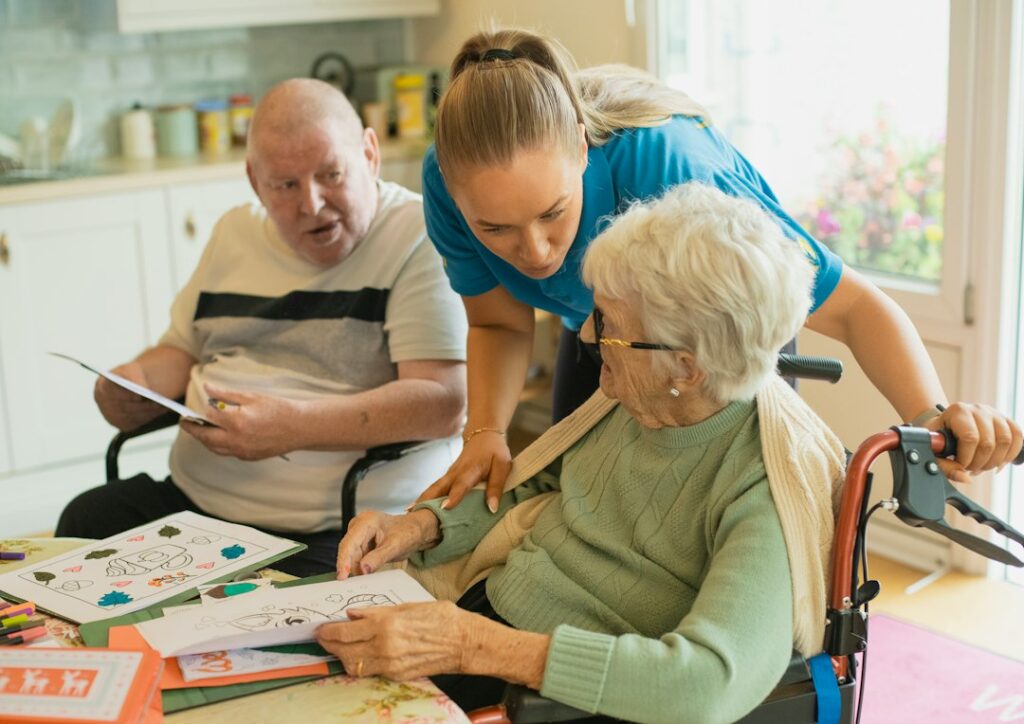
Moving to assisted living can improve safety and daily support, but the transition may also bring emotional, practical, and social challenges. Residents and families in Boalsburg often need time to adjust to a smaller living space, shared routines, new caregivers, and a different sense of independence.
Understanding these challenges in advance can make the move less disruptive and help families respond with patience rather than treating normal adjustment difficulties as signs that the decision was wrong.
Why does moving to assisted living feel emotionally difficult?
The move can feel like a loss, even when additional support is clearly needed. A resident may be grieving a longtime home, familiar neighbors, household routines, privacy, or the ability to make decisions without consulting anyone else.
Common emotional responses include:
- Sadness or irritability
- Worry about becoming dependent
- Embarrassment about needing help
- Anger toward family members
- Anxiety about unfamiliar surroundings
- Relief mixed with guilt
- Loneliness during the first several weeks
These reactions do not necessarily mean the setting is unsuitable. Adjustment often happens gradually. A person may understand the practical reasons for moving while still feeling uncertain or resentful.
Family members can help by acknowledging the loss without arguing about it. Statements such as “It makes sense that you miss your home” are often more helpful than repeated reminders about why the move was necessary.
How can a resident maintain independence after moving?
A common misconception is that assisted living removes personal choice. In practice, residents usually retain many decisions about clothing, daily preferences, personal belongings, activities, visitors, and how they spend free time.
Independence may look different after the move. Instead of managing an entire household, a resident may choose:
- When to get dressed
- Which activities to attend
- How to arrange the living space
- Whether to eat in a dining area or living unit, when permitted
- Which personal items to keep nearby
- How often to receive visitors
- What tasks to complete without assistance
Families should avoid taking over every decision simply because support is now available. A resident who can safely make choices should continue to do so. Too much family control can increase frustration and make the transition feel more like a loss of adulthood.
At the same time, independence should not be confused with refusing all help. Accepting assistance with bathing, medications, mobility, or meals can preserve energy for social activities and personal interests.
What makes downsizing and moving belongings challenging?
Reducing household belongings is often one of the most difficult parts of the transition. Personal items may represent decades of memories, family history, or identity. A quick cleanout can feel rushed and emotionally overwhelming.
A slower process is usually easier. Families can divide belongings into several categories:
- Items needed every day
- Sentimental possessions for the living unit
- Seasonal clothing
- Items to give to family members
- Items to store temporarily
- Items that can be donated or discarded
The new space should be measured before furniture is moved. Oversized furniture can make walking paths unsafe, especially for someone who uses a walker or has balance concerns. Keep frequently used items within easy reach and avoid loose rugs, crowded pathways, and unstable shelves.
For residents in the area, seasonal clothing requires particular attention. Winter coats, boots, gloves, and warmer bedding may be essential during cold or icy conditions, but storing too many items in a small space can create clutter. A clearly labeled seasonal storage plan can help.
Why do new routines sometimes cause frustration?
Assisted living introduces schedules for meals, medications, bathing support, transportation, housekeeping, activities, and safety checks. Even helpful routines can feel restrictive when they differ from a person’s lifelong habits.
A resident may become frustrated by:
- Waiting for assistance
- Eating at scheduled times
- Adjusting to unfamiliar meal choices
- Sharing common areas
- Hearing alarms or hallway activity
- Following new medication procedures
- Having less control over transportation
The first weeks are often a period of learning. Residents should be encouraged to write down concerns instead of trying to remember every detail during a stressful conversation. Families may also keep a short list of preferences, such as preferred wake-up time, food dislikes, communication needs, or calming routines.
A written care and support plan should reflect meaningful preferences whenever possible. In Pennsylvania, assisted living residences operate under state licensing requirements that address resident rights, safety, care, staffing, and other aspects of daily life. Residents and designated family members should understand how to raise concerns without intimidation or retaliation.
How can residents build new social connections?

Social isolation is a frequent concern after a move. A resident may be surrounded by people but still feel alone, especially if conversations are unfamiliar or activities do not match personal interests.
Participation often improves when expectations are modest. Attending one activity, sitting near the same people at meals, or joining a small conversation may be more comfortable than trying to become socially active immediately.
Useful approaches include:
- Starting with familiar interests such as music, sports, crafts, gardening, books, or local history
- Visiting common areas at quieter times
- Inviting one person to share a meal
- Maintaining regular phone or video calls
- Displaying photographs that encourage conversation
- Asking staff about activities suited to the resident’s abilities and interests
Family visits should also include ordinary conversation, not only discussions about health problems or care needs. Talking about weather, recipes, memories, household news, or seasonal events can help preserve a familiar relationship.
What happens if the resident dislikes the food, room, or care routine?
Not every problem is an emergency, but repeated concerns deserve attention. A resident may have difficulty adjusting to meals, room temperature, noise, lighting, bathing times, or the way assistance is offered.
Specific examples are more useful than broad complaints. Instead of saying “Nothing is working,” note:
- What happened
- When it happened
- How often it occurs
- What the resident expected
- What change might help
Some concerns may be resolved through a preference update or a conversation with the appropriate staff member. Safety issues, medication errors, unexplained injuries, neglect, threats, or possible abuse require prompt reporting through the residence’s complaint process and, when necessary, the appropriate state or emergency authority.
Residents have rights related to dignity, privacy, personal possessions, communication, and participation in decisions. Knowing these rights can make it easier to distinguish between a normal adjustment issue and a serious problem.
How long does adjustment usually take?
There is no single timetable. Some residents begin to feel comfortable within a few weeks, while others need several months. Progress may be uneven: a person can enjoy an activity one day and feel homesick the next.
Signs of improving adjustment may include:
- Recognizing staff members
- Sleeping more consistently
- Showing interest in meals or activities
- Personalizing the living space
- Speaking about the residence as part of daily life
- Reconnecting with familiar hobbies
- Expressing preferences more confidently
Persistent withdrawal, worsening confusion, repeated fearfulness, significant appetite changes, or statements about hopelessness should not be dismissed as ordinary adjustment. These changes may reflect depression, medication effects, untreated pain, cognitive changes, or another health concern that needs evaluation.
The transition is usually easier when residents retain meaningful choices, families remain patient, and concerns are addressed specifically. Moving to assisted living changes the setting of daily life, but it does not eliminate a person’s history, preferences, relationships, or ability to participate in decisions.
