
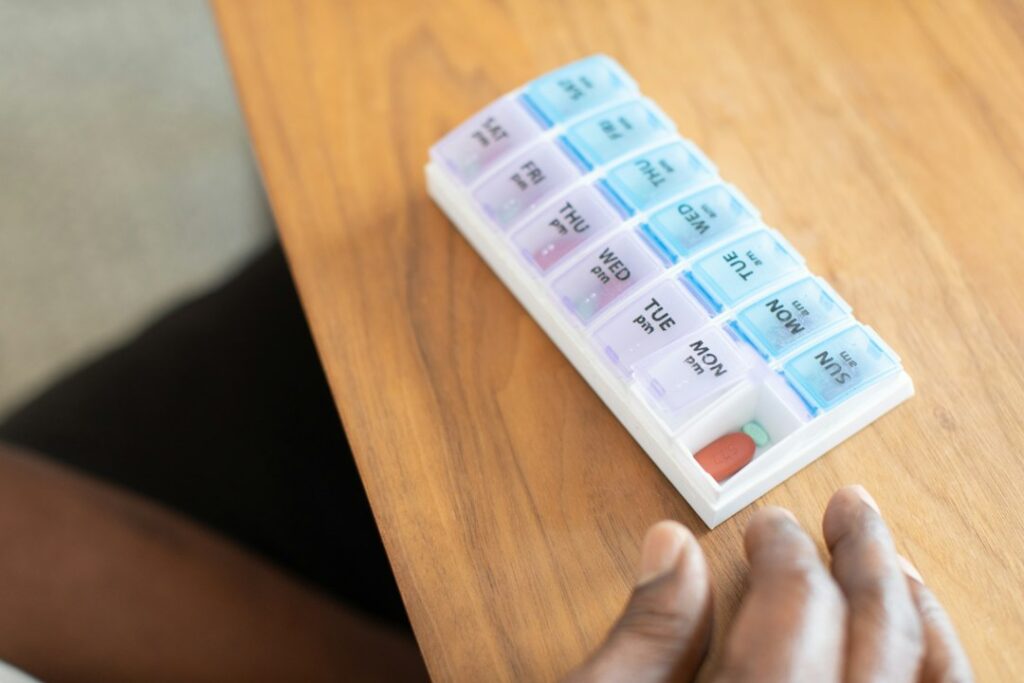
Assisted living medication management is a structured process that helps residents take the right medicines, in the right amount, at the right time. In Boalsburg, PA, families should expect the process to reflect the resident’s health assessment, physician’s orders, ability to self-administer medication, and Pennsylvania requirements for assisted living residences.
What does medication management include?
Medication management involves more than handing someone a pill. Depending on a resident’s needs, it may include:
- Reviewing current prescriptions, over-the-counter medicines, vitamins, and supplements
- Storing medications securely
- Reminding a resident when medication is due
- Opening containers or bringing medication to the resident
- Administering medication directly
- Recording each dose
- Watching for refusals, missed doses, side effects, or medication errors
- Communicating changes with the prescriber and the resident’s designated family contact
The level of assistance is individualized. A resident may be independent with some medications but need help with others, such as eye drops, insulin, or medications that require specific timing.
Can a resident continue taking medications independently?
Yes. Assisted living does not automatically mean that staff must administer every medication.
A resident may self-administer medication if an appropriate medical evaluation determines that the resident can recognize the medication, understand the prescribed amount, know when to take it, remove it from the container, and take or apply it correctly. The resident’s support plan should identify whether the person can self-administer independently or needs reminders and limited assistance.
Some residents may safely manage medication but benefit from:
- A reminder at breakfast or bedtime
- Medication being stored securely by staff
- Staff bringing the medication to the resident
- Help opening a bottle or package
- Supervision for selected medications
A resident may also self-administer one medication while receiving staff assistance with another. This can change over time if memory, vision, dexterity, judgment, or health status changes.
Who administers medication in Pennsylvania assisted living residences?
Prescription medications that a resident does not self-administer must be given by an authorized licensed professional or by staff members who have completed the required Pennsylvania medication-administration training.
Trained staff may administer certain types of medication, including oral, topical, eye, nose, and ear-drop medications. The rules also address specific injections, such as insulin and epinephrine for an allergic reaction. More complex medications or treatments may require a licensed nurse or another qualified practitioner.
Families can reasonably ask:
- Which staff members administer medications?
- What training have those staff members completed?
- Which medications require a nurse?
- How are injections, inhalers, patches, or as-needed medications handled?
- What happens when the usual medication staff member is absent?
The answers should be consistent with the residence’s license, written policies, and the resident’s care needs.
How are medications stored?
Medication storage is designed to prevent mix-ups, theft, contamination, and accidental access by another resident. Medications that staff administer are generally kept in a secure, controlled storage area with access limited to authorized personnel.
A resident who self-administers medication may be permitted to keep it in the living unit if the medication is stored safely and securely. Depending on the room arrangement and the resident’s abilities, a lockable drawer, cabinet, or other storage system may be required.
Prescription containers should remain properly labeled. Labels generally identify the resident, medication, dosage, directions, and prescriber. Medication intended for one resident must not be given to another resident.
This matters especially during transitions, such as moving into assisted living, returning from a hospital, or changing rooms. Older bottles, discontinued prescriptions, and duplicate supplies can create confusion if they are not removed from active use.
What is a medication administration record?
A medication administration record, often called a MAR, documents what medication a resident is prescribed and whether each scheduled dose was given.
The record typically includes:
- The resident’s name and medication allergies
- Medication name and strength
- Dosage and form, such as tablet, liquid, cream, or patch
- Route of administration
- Scheduled times
- Special instructions
- Date and time of administration
- The initials or name of the staff member who administered the medication

The record should be completed at the time medication is given. It allows staff to see whether a dose was administered, refused, held according to an order, or missed.
A blank space on a medication record does not always mean the medication was forgotten. It may reflect a refusal, a temporary hold, a hospital visit, or another documented reason. Families can ask the residence to explain the notation rather than assuming what occurred.
What happens if a resident refuses a medication?
A resident generally retains the right to make personal health decisions, including refusing a medication. Staff should document the refusal and follow the prescriber’s instructions about reporting it.
A single refusal may not create an emergency, but some medications are time-sensitive or unsafe to stop suddenly. Repeated refusals should prompt communication with the prescriber and a review of the care plan. Staff may also explore whether the problem involves swallowing difficulty, unpleasant taste, confusion, fear of side effects, or a schedule that conflicts with meals or sleep.
Medication should not be hidden in food or changed in form unless the prescriber has authorized the change and the medication can safely be altered. Some tablets must not be crushed, split, or mixed with food.
How are medication errors and side effects handled?
A medication error can include giving the wrong medication, wrong dose, wrong resident, wrong route, or wrong time. A missed dose may also qualify as a medication error.
The residence should promptly report the error to the resident, designated person, and prescriber as required. Documentation should describe what happened, the prescriber’s response, and steps taken to prevent a repeat occurrence.
Suspected adverse reactions require immediate attention. Warning signs may include unusual sleepiness, confusion, rash, swelling, breathing difficulty, severe dizziness, fainting, vomiting, or a sudden change in walking or behavior. Depending on the symptoms, staff may contact the prescriber or seek emergency treatment.
Families should report changes noticed during visits, including new unsteadiness, appetite changes, hallucinations, excessive fatigue, or difficulty swallowing. These symptoms may have several causes, but medication review is often part of evaluating them.
How do weather and seasonal routines affect medication management?
Seasonal conditions in Boalsburg can affect routines even when medication orders remain unchanged. Winter weather may delay transportation, medical appointments, pharmacy deliveries, or family visits. Cold-weather illness, dehydration during indoor heating season, and changes in activity can also affect how a resident feels.
During summer, residents may spend more time outdoors or away from the residence with family. Staff and families should clarify how medication will be handled during outings, overnight visits, vacations, or emergency evacuations.
A current medication list is especially useful during power outages, severe weather, hospital transfers, and urgent medical visits. Families should keep the residence informed about updated prescriber instructions and avoid bringing in unapproved medications from home.
What should families ask before or after a move?
Before moving into assisted living, families should provide a complete list of prescriptions, over-the-counter medicines, supplements, allergies, previous medication problems, and pharmacy instructions. The list should include medications used only occasionally.
Useful questions include:
- Will the resident self-administer, receive reminders, or receive full administration?
- Who updates the medication list after a physician visit?
- How are as-needed medications requested and documented?
- How are prescriptions refilled?
- How are medication changes communicated to family?
- What is the process after a hospital discharge?
- How often is the resident reassessed for self-administration?
Medication management works best when the resident, family, prescriber, pharmacy, and assisted living staff share the same current information. A change in memory, mobility, swallowing, eyesight, or daily routine may signal that the existing medication plan needs to be reviewed.
